

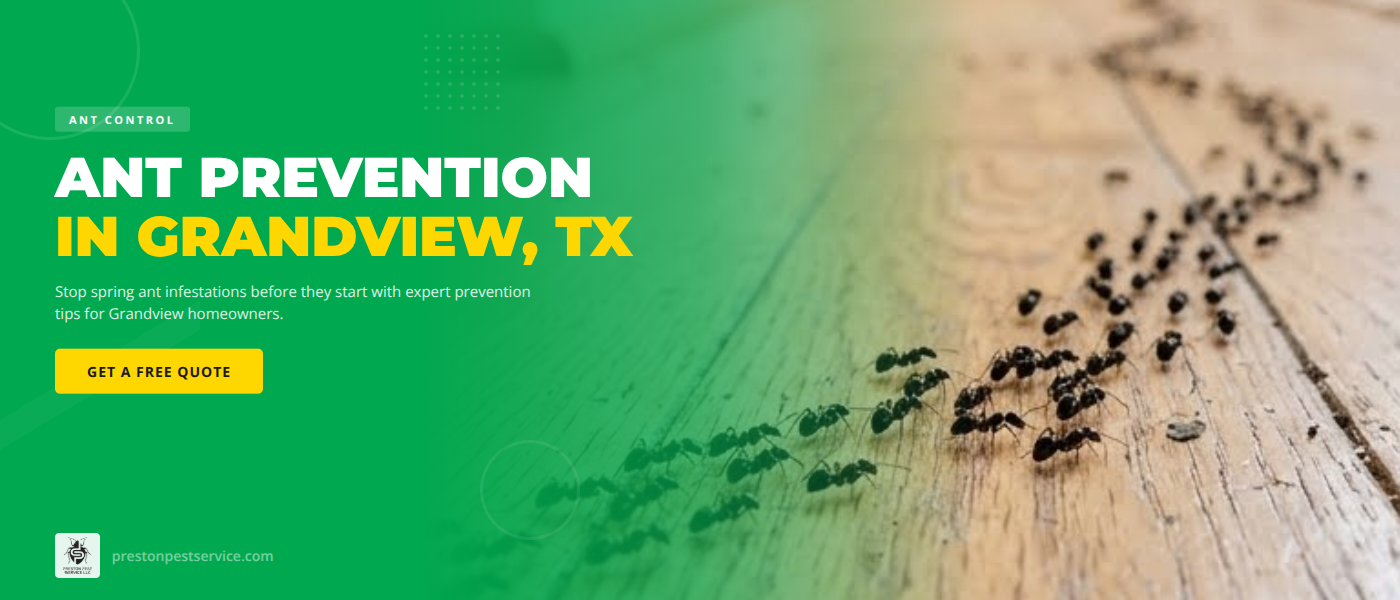
Spring in Grandview, TX means warmer temperatures, blooming wildflowers, and unfortunately, the return of one of the most persistent household pests in North Texas: ants. Every year, we see Grandview homeowners dealing with ant invasions that seem to appear overnight, with trails of tiny invaders marching across kitchen counters, congregating around pet food bowls, and building mounds in yards and driveways. The good news is that with the right preventive measures taken before spring arrives in full force, you can significantly reduce the chances of an ant infestation in your home.
At Preston Pest Service, we help homeowners throughout Johnson County, including Grandview, Venus, Midlothian, Maypearl, Alvarado, and Joshua, stay ahead of seasonal pest problems. Ant prevention is one of the most common concerns we address during the spring months, and we have developed a proven approach that combines professional expertise with practical steps you can take on your own. Here is everything Grandview, TX homeowners need to know about preventing ant infestations before spring kicks into high gear.
Why Ants Become a Problem in Grandview, TX Every Spring
Understanding why ants invade homes in the spring is the first step toward effective prevention. During the winter months, most ant species in the Grandview area enter a period of reduced activity. Colonies slow down, queens stop laying eggs, and worker ants stay deep underground where soil temperatures remain relatively stable. However, as soon as daytime temperatures begin consistently reaching the 60s and 70s, which typically happens in March and April in Johnson County, ant colonies spring back to life.
Queen ants that survived the winter begin laying eggs at a rapid pace, and colonies can grow from a few hundred members to several thousand in just a matter of weeks. Worker ants immediately begin foraging for food and water to support this rapid growth, and your home represents an abundant source of both. The combination of spring rains and warming soil also triggers mating flights, where winged reproductive ants leave established colonies to start new ones, further expanding the ant population around your property.
Texas spring weather, with its pattern of warm days, cool nights, and periodic heavy rainstorms, creates conditions that drive ants indoors. Rain floods underground nests, pushing ants to seek higher, drier ground, which often means moving into your home through cracks in the foundation, gaps around pipes, and spaces beneath doors.
Common Ant Species in Grandview, TX Homes
Not all ants are created equal, and knowing which species you are dealing with is essential for effective control. Here are the most common ant species we encounter in Grandview and throughout Johnson County.
Fire Ants
Fire ants are arguably the most dreaded ant species in Texas. These aggressive, reddish-brown ants build large mound nests in lawns, gardens, and along driveways. They are well known for their painful stings, which can cause welts, allergic reactions, and in rare cases, severe medical responses. Fire ant mounds become especially active and visible in the spring as colonies expand rapidly. A single fire ant colony can contain 100,000 to 500,000 workers, making professional treatment the most effective approach for control.
Carpenter Ants
Carpenter ants are large, typically black ants that excavate wood to create their nesting galleries. Unlike termites, they do not eat wood, but the structural damage they cause can be just as concerning over time. Carpenter ants are attracted to moisture-damaged wood, making homes with leaky roofs, plumbing issues, or poor drainage particularly vulnerable. In the Grandview area, we see carpenter ant activity increase significantly in the spring as colonies resume active foraging.
Odorous House Ants
These small, dark brown ants are one of the most common indoor ant species in Grandview homes. They get their name from the unpleasant, rotten coconut-like smell they produce when crushed. Odorous house ants travel in large trails and are frequently found in kitchens and bathrooms, where they forage for sweet and greasy foods. They establish multiple satellite colonies, which makes them particularly difficult to eliminate without professional treatment.
Crazy Ants
Tawny crazy ants have been expanding their range across Texas in recent years and are becoming an increasing concern for Grandview homeowners. These ants move erratically rather than in straight lines, and they are known for invading electrical equipment, including HVAC units, outlets, and circuit breakers. Standard over-the-counter insecticides are largely ineffective against crazy ants, and improper treatment can actually cause colonies to split and spread, making the problem worse.
Proven Ant Prevention Steps for Grandview, TX Homeowners
The most effective approach to ant control is prevention. By taking action before ant colonies fully activate in the spring, Grandview homeowners can create conditions that make their properties far less attractive to foraging ants.
Seal Entry Points Around Your Home
Ants can enter your home through incredibly small openings. We recommend a thorough inspection of your home's exterior, paying special attention to these common entry points:
- Cracks and gaps in the foundation, especially where concrete meets siding or brick
- Spaces around plumbing pipes, electrical conduits, and utility lines that enter the home
- Gaps beneath exterior doors and around window frames
- Openings around outdoor faucets and dryer vents
- Spaces where the roofline meets the siding, which carpenter ants frequently exploit
Use silicone-based caulk to seal small cracks and gaps, and install or replace door sweeps and weatherstripping on all exterior doors. For larger openings, expanding foam sealant provides a durable barrier.
Eliminate Food Sources
Ants are primarily driven by their search for food, and your kitchen is their primary target. Taking these steps can dramatically reduce ant activity indoors:
- Store pantry items, cereals, sugar, and pet food in airtight containers
- Clean up spills and crumbs immediately, including behind appliances and under counters
- Rinse out recyclable containers before placing them in bins
- Take out trash regularly and use trash cans with tight-fitting lids
- Do not leave pet food bowls out overnight
- Wipe down countertops and stovetops daily with a mild cleaning solution
Address Moisture Issues
Many ant species, particularly carpenter ants, are attracted to moisture. Addressing moisture problems around your Grandview home is one of the most effective long-term ant prevention strategies:
- Repair leaky faucets, pipes, and fixtures promptly
- Ensure gutters and downspouts direct water away from your foundation
- Fix any grading issues that allow water to pool near the foundation
- Use dehumidifiers in damp basements or crawl spaces
- Repair or replace moisture-damaged wood before it attracts carpenter ants
Maintain Your Yard and Landscaping
Your yard plays a significant role in ant activity around your home. Proper landscaping maintenance creates a less hospitable environment for ant colonies:
- Trim tree branches and shrubs so they do not touch the exterior of your home
- Maintain a six-inch gap between mulch or soil and your home's siding or foundation
- Store firewood at least 20 feet from the house and elevate it off the ground
- Remove leaf litter, yard debris, and unused landscaping materials that provide nesting sites
- Treat fire ant mounds in your yard before colonies reach their peak spring population
When to Call a Professional for Ant Control in Grandview, TX
While preventive measures can significantly reduce ant activity, there are situations where professional treatment is the most effective option. We recommend contacting our team if you experience any of the following:
- Recurring ant trails that return even after cleaning and sealing efforts
- Large numbers of ants appearing suddenly, which may indicate a colony inside or beneath your home
- Winged ants emerging from walls, ceilings, or around windows, which signals an established indoor colony
- Multiple fire ant mounds in your yard that resist over-the-counter treatments
- Signs of carpenter ant activity, including sawdust-like frass near wooden structures
- Crazy ant activity near electrical equipment or inside your home
Our technicians begin every ant control service with a thorough inspection to identify the species present, locate nesting sites, and determine the most effective treatment approach. Species identification is critical because different ant species respond to different treatment methods. For example, baiting is highly effective for odorous house ants and fire ants, while carpenter ant control may require direct treatment of nesting sites combined with moisture remediation.
Frequently Asked Questions About Ant Prevention in Grandview, TX
When is the best time to start ant prevention in Grandview, TX?
The best time to start ant prevention in Grandview is late February through early March, before ant colonies fully resume their spring activity. Taking preventive steps during this window, including sealing entry points, eliminating food sources, and scheduling a professional perimeter treatment, gives you the best chance of avoiding infestations throughout the spring and summer months.
Why do ants keep coming back even after I clean my kitchen?
Ants leave invisible pheromone trails that guide other colony members to food sources. Even after you clean up the visible food and ants, these chemical trails persist and continue to attract new foragers. Cleaning with a vinegar-water solution can help disrupt pheromone trails, but for persistent problems, professional treatment that targets the colony itself is the most effective long-term solution.
Are fire ants dangerous for children and pets in Grandview, TX?
Fire ant stings can be painful and potentially hazardous, particularly for small children, elderly individuals, and pets. Fire ants swarm aggressively when their mound is disturbed, delivering multiple stings simultaneously. While most stings cause temporary pain and small welts, some individuals may experience severe allergic reactions. We recommend treating fire ant mounds in your yard promptly, especially in areas where children and pets play.
Can I treat ant problems myself with store-bought products?
Over-the-counter ant sprays and baits can provide temporary relief for minor ant problems, but they rarely eliminate the colony itself. In some cases, spraying ants with repellent products can actually cause colonies to split and relocate, creating multiple infestations where there was previously only one. This is especially true for odorous house ants and crazy ants. For lasting results, professional treatment that targets the colony is the most reliable approach.
How often should Grandview, TX homeowners schedule pest control for ants?
We recommend quarterly pest control services for Grandview homeowners to maintain year-round protection against ants and other common pests. Spring and early summer are the most critical treatment periods for ant control, as this is when colonies are most actively expanding and foraging. A professional perimeter treatment applied before the peak of ant season creates a barrier that keeps ants from entering your home.
Get Ahead of Ant Season in Grandview, TX
Do not wait until ants have already invaded your kitchen to take action. Spring ant prevention starts with understanding the threat, taking practical steps to make your home less attractive to ants, and partnering with a professional pest control team that knows how to target the specific species present in the Grandview area.
We have helped hundreds of homeowners across Johnson County keep their homes ant-free, and we are ready to help you too. Our team combines thorough inspections, targeted treatments, and ongoing prevention strategies to deliver results that last.
Contact us today to schedule a spring pest inspection and get ahead of ant season in Grandview, TX. We serve homeowners in Grandview, Venus, Midlothian, Maypearl, Alvarado, Joshua, and communities throughout Johnson County.


