

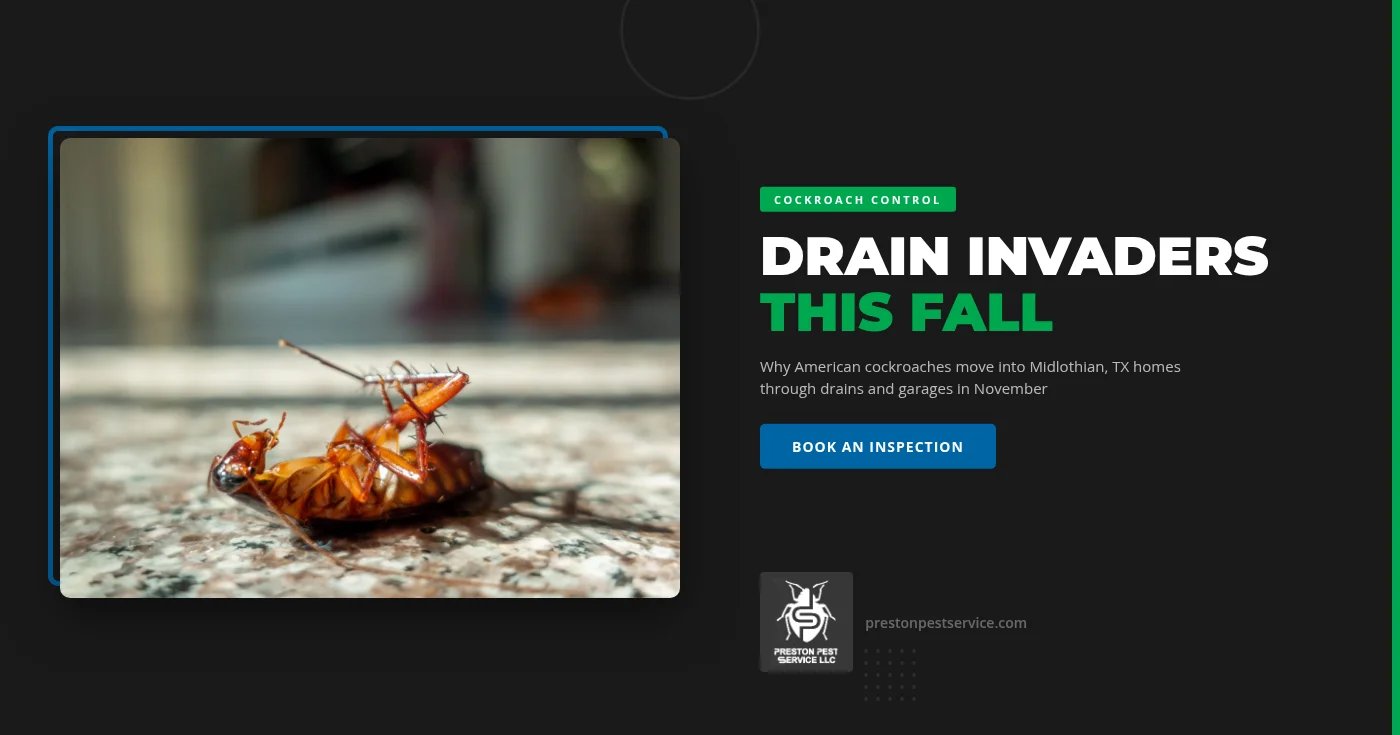
You flip on the bathroom light late one November night and there it is: a reddish-brown roach nearly two inches long, scrambling toward the tub drain. If that sounds familiar, you’re not alone. Fall is when many homeowners start searching for cockroach control Midlothian TX help. Cooler nights push large outdoor roaches toward the warmth and moisture inside our homes.
Here at Preston, we see this pattern every year. The roaches people call “water bugs” or “sewer roaches” are usually American cockroaches. They don’t chew through walls to get in. They follow pipes, slip up dry floor drains, squeeze under garage doors and crawl through weep holes in brick veneer.
In this post, we’ll cover why sightings climb as the weather turns, how to identify American cockroaches, where they enter, the signs of a bigger problem, the DIY steps that help, and how professional fall cockroach control keeps them out for the winter.
Why Cockroach Sightings Rise in Midlothian Homes in November
American cockroaches thrive in warm, humid conditions. Through summer, most of them stay outside in storm drains, sewer lines, water meter boxes, mulch beds and tree holes. As fall settles in, that changes. In North Texas, November afternoons are often mild while nights can drop into the 40s, based on typical climate normals from the National Weather Service Fort Worth office. Cold slows roaches down, so they look for steady warmth after dark.
Fall weather adds another push. Heavy rain from passing cold fronts can flood sewers and drainage lines, forcing roaches up and out. When they surface, the nearest warm, damp shelter is often a house: a bathroom, a laundry room, a water-heater closet or an attached garage.
This is a general seasonal pattern rather than a precise calendar. Some years the first cold snap arrives early, and some years it’s late. In our experience, though, the weeks after the first real cold front tend to bring more calls about big cockroaches in bathrooms at night.
Many homes in the area are slab-on-grade with brick veneer, attached garages and generous mulch beds. North Texas clay soil also shifts with wet and dry spells, which can open small gaps where plumbing passes through the slab. None of that means your home is doing anything wrong. It simply means there are more doorways to watch.
Meet the American Cockroach: The Large Roach Moving In from Sewers and Mulch
The American cockroach (Periplaneta americana) is the largest common house roach in Texas. Adults usually measure about 1.5 to 2 inches long. They’re reddish-brown, with a lighter band behind the head that some people say looks like a figure eight. Adults have full wings and can glide short distances, which surprises plenty of people the first time they see it.
These aren’t the small, tan roaches that live in kitchen cabinets. Those are usually German cockroaches, which breed almost entirely indoors. American cockroaches are mainly outdoor insects that wander inside when conditions push them. That’s why sewer roaches in Texas also go by “palmetto bugs” and “water bugs.” They’re the same insect.
How They Reproduce
A female produces egg cases called oothecae, each holding roughly 14 to 16 eggs, and she may produce a dozen or more over her life. Nymphs can take many months, often around a year, to reach adulthood, and adults may live a year or longer. Figures vary between sources, but the takeaway is simple: a few roaches that settle into a warm wall void can build a lasting population.
Why They Matter
Because they travel through sewers and decaying material, American cockroaches can carry bacteria onto counters, dishes and food. The National Institute of Environmental Health Sciences also links cockroach allergens to asthma symptoms, particularly in children. For more on identification, the Texas A&M AgriLife Extension’s American cockroach fact sheet is a helpful resource.
The Top Fall Entry Points: Floor Drains, Plumbing Gaps, Garages and Weep Holes
American cockroaches follow moisture and air movement, and they’ll use any opening they can fit through. These are the spots we check first.
Floor Drains and Rarely Used Drains
Every drain has a P-trap, a curved section of pipe that holds water and blocks sewer gas and insects. In a guest bathroom, laundry room or garage floor drain that rarely gets used, that water can evaporate. Once the trap is dry, there’s an open path from the sewer line into your home. It’s one of the most common reasons we hear about cockroaches coming up through drains.
Plumbing Gaps
Look under sinks, behind toilets and around washer hookups. Where pipes pass through walls or floors, the gaps are often never fully sealed. Roaches traveling along pipes in wall voids can step right through.
Garages
Attached garages are a favorite stopover. Worn bottom seals on garage doors, stacked cardboard, pet food bags and the warmth of a water heater all invite roaches in. Many homeowners notice cockroaches in the garage after a cold front before they ever see one in the house.
Weep Holes
Brick homes have small gaps near the base of the wall called weep holes. They let moisture drain from behind the brick, so they shouldn’t be filled solid. Still, open weep holes can give roaches, and sometimes mice, easy access to wall voids. If you’re seeing signs of both, our rodent control service can handle that side of the problem.
Signs You Have More Than a Stray Roach
One big roach that wandered in after a storm isn’t always cause for alarm. But American cockroaches that find a warm, moist hiding spot may stay, and the signs add up. Watch for:
- Repeated sightings in the same room, especially near drains, the water heater or the laundry area.
- Daytime activity. Roaches prefer the dark, so seeing them by day can suggest crowded hiding spots.
- Droppings that look like small, dark, blunt-ended pellets along baseboards, in cabinets or in the garage.
- Egg cases, which are dark brown, bean-shaped capsules tucked into corners, cardboard or behind appliances.
- A musty, oily odor in closets, crawl spaces or rooms with plumbing.
Also watch for small, wingless roaches that look like miniature adults. Those are nymphs, and they’re a strong clue that roaches are breeding nearby rather than passing through.
Moisture problems often travel together. The damp drains and trash areas that draw roaches can also attract drain flies and house flies, which is why we sometimes pair roach work with fly control. If you’re noticing two or more of these signs, schedule an inspection before the population settles in for winter.
DIY Steps to Seal Drains and Garages Before Winter
There’s a lot you can do to make your home less inviting. These steps cost little and often make a real difference.
- Keep P-traps full. Pour about a quart of water into rarely used drains every one to two weeks. Drain covers or one-way trap seals add another layer of protection.
- Seal plumbing penetrations. Use silicone caulk around pipes under sinks, behind toilets and at washer hookups. Larger gaps may need expanding foam.
- Fix the garage door seal. Replace a cracked or flattened bottom seal, and add a sweep to the door between the garage and the house.
- Clear the garage floor. Store pet food in sealed containers and swap cardboard boxes for plastic bins on shelves.
- Screen weep holes. Use weep-hole covers made for the purpose so moisture can still escape.
- Pull back mulch. Keep mulch about 12 inches from the foundation and repair dripping hose bibs or irrigation leaks.
- Reduce indoor moisture. Fix leaky faucets and run bathroom fans after showers.
One important caution: never pour pesticides down a drain. It can damage plumbing, may not reach the roaches and isn’t how these products are meant to be used. If you suspect roaches are living in your drain lines, ask a professional about labeled drain treatments.
How Professional Cockroach Control in Midlothian, TX Stops the Fall Invasion
DIY sealing goes a long way, but it can’t reach wall voids, sewer connections or hidden harborage around your property. That’s where a cockroach exterminator brings different tools. Here at Preston, we follow an integrated pest management approach, the same general strategy extension programs like Texas A&M AgriLife recommend.
Inspection First
We start by finding where roaches are coming from and where they’re hiding. That means checking drains, plumbing penetrations, the garage, weep holes, the water heater area, mulch beds and moisture problems around the foundation.
Targeted Treatment
Based on what we find, treatment may include gel baits placed in cracks and voids where roaches travel, insect growth regulators that interrupt nymph development, and perimeter treatments around the outside of the home. We choose products and placements with your family and pets in mind.
Exclusion and Follow-Up
We point out entry points that need sealing and recommend practical fixes. Because egg cases can hatch after an initial treatment, follow-up visits help catch the next generation. Ongoing service through the cooler months gives you peace of mind that the fall invasion won’t become a winter problem. Results depend on the property and level of activity, but our goal is to bring roach activity down and keep it down.
Frequently Asked Questions About Fall Cockroach Control in Midlothian, TX
Why do cockroaches come inside in November in Texas?
Cooler nights slow American cockroaches down, and fall rains can flood the sewers and drains where they live. They head for warm, damp shelter, and homes with dry drains or gaps around pipes are easy targets.
Are “water bugs” and American cockroaches the same thing?
Usually, yes. “Water bug,” “palmetto bug” and “sewer roach” are common nicknames for the American cockroach. True aquatic water bugs rarely end up in homes.
How do I stop cockroaches coming up through floor drains in my Midlothian home?
Keep the P-trap full by running water through rarely used drains every week or two, and consider a drain cover or one-way trap seal. If roaches keep appearing, an inspection can check for cracked pipes or other openings.
Do cockroaches die off in winter in Texas?
Not usually. Cold slows them down, but North Texas winters are often mild enough that roaches survive in sewers, wall voids and crawl spaces, then become active again when temperatures rise. Sealing entry points in fall helps keep them from wintering inside your walls.
Book Fall Cockroach Control in Midlothian, TX Before Winter
American cockroaches follow the season, and November gives them every reason to look for a way inside. Keeping drains filled, sealing plumbing gaps and tightening up the garage will help, and professional treatment reaches the places DIY can’t.
We’re based in Venus and proudly serve Midlothian and neighboring communities like Alvarado, Joshua, Maypearl and Ovilla. If you want cockroach control Midlothian TX families can rely on this fall, contact us to schedule an inspection. We’ll find where roaches are getting in and help you keep them out all winter.
Why Do Big Cockroaches Keep Showing Up in My House Every Fall?
If you’re spotting large roaches near your drains, laundry room or garage once the nights turn cool, you’re dealing with a seasonal pattern we see every year. American cockroaches spend the warm months outdoors in sewers, storm drains and mulch, then look for warmth and moisture when fall weather arrives. Dry drains, plumbing gaps and worn garage door seals make it easy for them to slip inside.
Our cockroach control service is built around finding and closing those pathways. Here’s what we focus on:
- A thorough inspection of drains, pipe penetrations, garages, weep holes and moisture-prone areas
- Targeted treatments such as gel baits, insect growth regulators and perimeter applications, chosen with your family and pets in mind
- Practical exclusion advice so you know exactly which gaps to seal
- Follow-up visits to catch nymphs that hatch after the first treatment
Roaches often aren’t the only visitors drawn to damp drains and garages. When we find signs of mice or drain flies, we can address those too through our rodent control and fly control services, so your home gets one coordinated plan instead of piecemeal fixes.
We’re based in Venus and serve homes throughout the surrounding communities. Whether you’ve seen one roach or a dozen, we’ll help you understand what’s happening and what it takes to stop it. Reach out to our team to schedule an inspection and head into winter with real peace of mind.


