

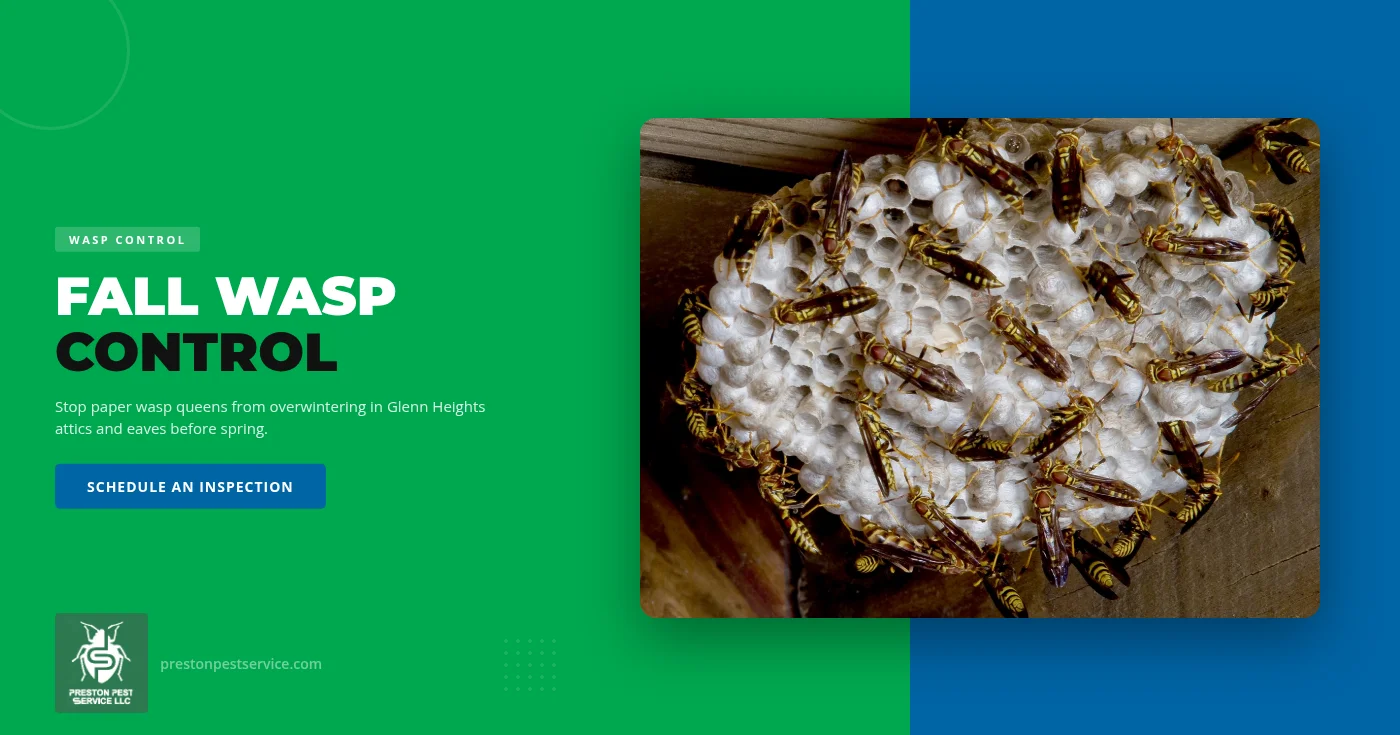
It’s a mild November afternoon, the windows are cracked, and a paper wasp is crawling slowly across your kitchen ceiling. Most homeowners assume wasp season ended with summer, but that lone visitor tells a different story. This is the time of year when fall wasp control in Glenn Heights, TX does its most important work, long before anyone sees a new nest under the porch.
The wasps you notice now usually aren’t foraging workers. Many are mated queens hunting for a sheltered spot to wait out winter, and attics, eaves and wall voids suit them perfectly. Every queen that settles in quietly today can start a brand-new colony next spring.
Here at Preston, we see this seasonal shift every year. Below, we explain why wasps linger into November, how overwintering wasps hide in your home, the signs to watch for, and the steps that keep spring nest numbers down.
Why Wasps Are Still Around Glenn Heights Homes in November
Late-season wasps confuse people because the rest of the yard is winding down. The explanation lies in the colony life cycle. Through spring and summer, a paper wasp or yellow jacket colony is busy raising workers. By late summer and fall, the colony shifts gears and produces new queens and males. Those queens mate, and as the old colony declines, they leave to find shelter.
In our area, that search often lines up with November. Cool nights tell the queens it’s time to tuck in, while warm afternoons keep them moving. Homes around Glenn Heights offer exactly what they want: dry, protected spaces with small gaps leading inside. Soffit seams, gable vents, loose fascia boards and gaps around window frames all work as doorways.
Yellow jackets add another layer. Their colonies can be at peak size in early fall, with workers that grow bolder around trash cans, patio drinks and pet food. Even as colonies wind down, the stragglers can be defensive.
So if you’re asking, “Why are wasps in my house in November?” the short answer is that they’re house hunting. The longer answer, and what to do about it, follows below.
How Paper Wasp and Yellow Jacket Queens Overwinter in Attics, Eaves and Wall Voids
Paper Wasp Foundresses
Paper wasps (Polistes) are the slender, long-legged wasps that build open, umbrella-shaped combs under eaves and porch ceilings. According to Texas A&M AgriLife Extension, it’s generally the mated queens, sometimes called foundresses, that carry the species into the next year; the workers and the old colony die off as temperatures drop. Those queens often cluster in sheltered places such as attics, soffits, eaves, wall voids, sheds and window frames. When spring warms up, each one emerges to build a new nest from scratch.
Yellow Jacket Queens
Yellow jackets (Vespula) usually nest in hidden cavities, often underground or inside wall voids. As a rule, the colony dies in winter and only newly mated queens survive, hiding in debris or in protected corners of structures. In warmer southern climates, however, some colonies have been documented surviving winter and growing into very large perennial nests. How often that happens around the Dallas–Fort Worth region isn’t well established, so we treat any yellow jacket activity in late fall as worth a closer look rather than assuming it will disappear on its own.
Either way, the queens hiding in your structure now are the starting point for next year’s nests.
Signs Wasps Are Sheltering in Your Home This Fall
Overwintering queens are quiet guests, so the clues can be subtle. Here’s what we suggest watching for this fall:
- Wasps indoors on warm days, often near windows, skylights or ceiling light fixtures, especially sluggish ones that crawl more than they fly.
- Clusters of wasps around soffits, eaves or the gable ends of your roofline on sunny afternoons.
- Dead or slow-moving wasps in the attic, on windowsills or near the attic access hatch.
- Steady traffic in and out of a single gap in siding, a brick weep hole or a wall seam, which can point to an active yellow jacket colony inside the wall.
- Faint rustling sounds in a wall, or a soft, discolored spot in drywall, both warning signs of a large hidden nest.
- Old gray, papery combs under eaves, porch ceilings or shed roofs, which show the spot has drawn paper wasps before.
A few wasps near a window on a warm November day usually point to sheltering queens. Continuous traffic at one opening is different and calls for professional help before anyone seals it.
Why Mild North Texas Winters Keep Wasps Active Longer
North Texas winters are rarely long or harsh, and that works in the wasps’ favor. Average November highs in our part of the state often reach the upper 60s, and the first freeze tends to arrive somewhere in mid-to-late November, though the date swings a lot from year to year. The National Weather Service office in Fort Worth tracks local freeze dates and climate data if you want to see how this year compares.
That variability matters. A string of cool nights sends queens into hiding, and then a warm stretch wakes them back up. Each warm spell draws some of them toward light and warmth, which is why homeowners see “random” wasps in bedrooms and living rooms in the middle of winter. Queens tucked into wall voids near heated rooms may become active even more often.
A mild season can also give late yellow jacket colonies extra time to keep foraging. Instead of a clean break between seasons, our area often gets a slow fade, with activity tapering through November and popping up again during warm weeks in December and January.
Are wasps still active in November in North Texas? Often, yes, which is exactly why fall is a smart time to act.
Sealing Entry Points Before Queens Settle In
Exclusion, or physically closing the gaps wasps use, is the best long-term way to keep wasps out of an attic in fall. The work itself is straightforward:
- Caulk gaps around window and door frames, utility lines and where trim meets siding or brick.
- Repair or replace damaged soffits and loose fascia boards.
- Add fine mesh screening behind gable, ridge and soffit vents.
- Check attic access hatches and recessed light fixtures for gaps that open into living spaces.
- Replace worn weatherstripping and door sweeps.
Timing is the tricky part. Extension specialists generally recommend finishing exclusion after a hard freeze or once wasp activity stops, so you aren’t sealing live queens inside. More importantly, never plug the entrance of an active yellow jacket colony. Blocking the only exit can push the wasps deeper into the wall and out through light fixtures or outlets into your home. Have the colony treated first, then seal.
There’s a bonus to this work. The same cracks that let wasps in also welcome spiders and mice, so fall exclusion pairs naturally with our spider control and rodent control services.
What to Do With Old Nests and Late-Season Yellow Jacket Colonies
Old Paper Wasp Nests
Paper wasps don’t reuse old nests. Once the colony has died off and activity has clearly stopped, an empty comb is just leftover paper. Removing it is mostly about tidiness and peace of mind, and it helps you spot any new nest that starts in the same place next spring. Before knocking one down, watch it for a few minutes on a warm afternoon. If wasps are still landing on it, leave it alone and call us; paper wasp removal goes smoothly when it’s timed right.
Late-Season Yellow Jacket Colonies
Yellow jackets are a different story. A late-season colony can still hold hundreds or even thousands of workers, and they defend the nest aggressively. Ground nests are easy to disturb with a mower, and nests inside walls are hard to reach without the right equipment. We don’t recommend spraying store-bought products into a wall void yourself. It can scatter the colony, drive wasps into living areas and leave the nest partly active.
Professional yellow jacket control focuses on treating the colony at its source and confirming it’s inactive before anyone seals the entry. That order of operations protects your family and keeps the problem from moving indoors.
How a Professional Fall Inspection Prevents Spring Nest Surges
A fall inspection is about next spring as much as this month. Here at Preston, we approach wasps through integrated pest management, which means we start by finding where and why pests are getting in, then combine targeted treatment with prevention.
During a fall visit, we typically:
- Inspect eaves, soffits, fascia, vents and the attic for sheltering queens and old nest sites.
- Look for signs of active yellow jacket colonies in walls, the ground and landscaping.
- Treat active nests and harborage areas with methods suited to your home, pets and family.
- Point out entry gaps and recommend exclusion steps, timed for the right point in the season.
Every queen removed or kept out this fall is one fewer potential colony in April. That’s the real value of wasp prevention before spring in Glenn Heights: fewer surprise nests on the porch, around the swing set or inside the walls when warm weather returns.
Many homeowners pair a fall wasp visit with ongoing residential pest control, so ants, roaches, spiders and rodents are covered through the cooler months too. You can learn more about how we serve neighborhoods across the Dallas area and nearby communities.
Frequently Asked Questions About Fall Wasp Control in Glenn Heights
Why are there wasps in my house in November?
Most are mated queens that slipped in through gaps around the roofline, vents or windows looking for winter shelter. Warm afternoons wake them up, and they follow light and warmth into living spaces. A few sluggish wasps near windows usually point to overwintering queens rather than an indoor nest.
Will wasps in my attic die over the winter?
The workers usually die off, but mated queens are built to ride out the cold in sheltered spots, and they’ll typically emerge in spring to start new nests. Some yellow jacket colonies in warm climates may also persist through winter, so it’s worth having wasps in the attic checked rather than waiting.
Do wasps reuse old nests?
Paper wasps don’t reuse old combs, though new queens may build in the same sheltered spots because conditions there are favorable. Removing empty nests after activity stops makes it easier to spot new construction early.
When is the best time to wasp-proof a home in Glenn Heights?
Late fall is ideal. Schedule an inspection while queens are still settling in, have any active colonies treated, and finish sealing after a hard freeze or once activity has clearly stopped. That timing keeps live wasps from being trapped inside your walls.
Schedule Fall Wasp Control in Glenn Heights, TX Today
November wasps aren’t a fluke. They’re next year’s colonies looking for a place to wait out the winter, and your attic, eaves and wall voids are at the top of their list. A little attention now can mean a far quieter spring.
Preston is a local pest control team based in Venus, and we’re proud to help homeowners in Glenn Heights and surrounding communities keep their homes protected through every season. If you’ve spotted wasps indoors or simply want peace of mind before spring, contact our team to schedule an inspection. Fall wasp control in Glenn Heights, TX is one of the easiest ways to stay ahead of spring nests, and we’re ready to help.
Can Preston Help With Wasps Sheltering in My Attic This Fall?
Yes, and fall is one of the best times for us to help. When wasp queens start looking for winter shelter, we focus on finding where they’re getting in and stopping next spring’s nests before they start. Here at Preston, we build every visit around integrated pest management, so treatment and prevention work together instead of relying on a quick spray alone.
When you schedule a fall visit, we can:
- Inspect your roofline and attic for overwintering queens, old paper wasp combs and likely entry points.
- Check for active yellow jacket colonies in walls, the ground and landscaping, and treat them before any gaps are sealed.
- Recommend exclusion steps for soffits, fascia, vents and window frames, timed so live wasps aren’t trapped inside your walls.
- Cover other cool-season invaders such as spiders, rodents, ants and roaches through our residential pest control service.
We know a wasp buzzing around the living room in November can be unsettling, especially with kids or pets in the house. Our goal is to give you peace of mind now and a calmer spring later, using methods suited to your home and family.
You can browse everything we offer on our pest control services page, or reach out to our team to set up a fall inspection. We’re happy to answer your questions and walk you through what we find, step by step.


