

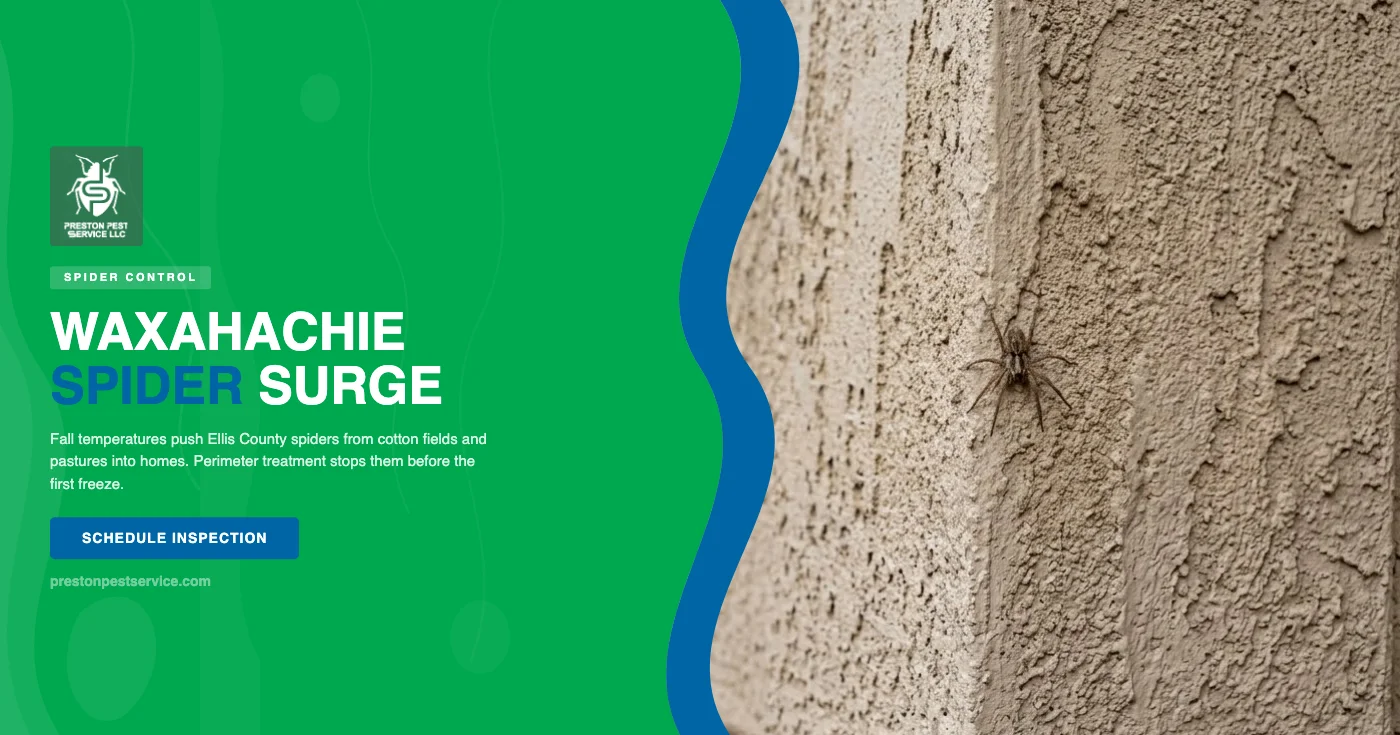
If you own a home in Waxahachie, TX, September is when spider sightings shift from occasional to nearly daily. Nighttime lows drop into the 60s, the first cold fronts sweep across Ellis County, and the outdoor insects spiders have been feeding on all summer start to disappear. Your garage, attic, and living-room corners suddenly look a lot more appealing to the eight-legged residents that spent the summer outside. Reliable spider control Waxahachie TX homeowners can count on has to address that seasonal shift, and early fall is the window when getting ahead of the pressure matters.
We've handled spider calls across Ellis County long enough to know how quickly a single web in a garage corner turns into a widespread interior problem. The fall spiders Waxahachie TX residents notice through October and November are often the leading edge of populations that keep expanding through the cool months if nothing changes indoors.
Why Spider Activity Surges in Waxahachie, TX as Fall Temperatures Drop
Spiders respond to three things above almost everything else: prey availability, temperature, and shelter. Through the summer, all three are plentiful outdoors in North Texas — flying insects swirling around porch lights, sheltered harborage in shrubs and mulch beds, and warm nights that keep hunting productive. Once September arrives, that equation flips. Cold fronts strip the outdoor insect population, and every spider that spent June through August thriving on a garage soffit or patio corner suddenly has a lot fewer meals within reach.
Two things happen next. First, the prey insects themselves migrate indoors — house crickets, moths, silverfish, and small flies push through the same gaps your home already has. Spiders follow the food. Second, fall is peak mating season for many Texas spider species. Male wolf spiders and grass spiders start wandering widely in search of females, and that wandering rarely respects garage-door sweeps, weep holes, or worn window screens. The homeowners we hear from in November are almost always dealing with populations that first pushed indoors in September — which is why the fall spider prevention we recommend starts well before the first freeze.
Which Spider Species Are Most Common in Ellis County Homes This Fall
Treatment plans aren't one-size-fits-all. Knowing which spider we're dealing with tells us where to inspect, what treatment approach to use, and what exclusion work will keep them out.
Common house spider (Parasteatoda tepidariorum). The small, brownish spider responsible for most of the tangled cobwebs in upper corners of ceilings, garages, and window frames. Harmless to people and, in modest numbers, a fair indicator that interior insect pressure is under control. In large numbers, though, they signal an active prey-insect problem worth investigating.
Wolf spider. Large, fast, ground-hunting spiders that come indoors in fall following their prey. They don't build webs — they roam floors, baseboards, and low corners at night. Their size is alarming, but they're not medically significant, and sightings inside are one of the clearest signs that outdoor insect activity has shifted indoors.
Black widow (Latrodectus mactans). One of two medically significant spiders in Texas. Females are jet-black with a red or orange hourglass on the underside of the abdomen. They build irregular, messy webs low to the ground in undisturbed spots — meter boxes, woodpiles, sheds, the undersides of outdoor furniture, and garage corners. According to the Texas Department of State Health Services, black widow venom is a neurotoxin that can cause severe muscle pain, cramping, and systemic reactions. Any suspected black widow in a garage, shed, or outbuilding warrants professional removal.
Brown recluse (Loxosceles reclusa). The second medically significant Texas spider. Tan to golden-brown, with a distinctive violin-shaped mark on the head region and six eyes arranged in three pairs (most spiders have eight). Brown recluses prefer quiet, cluttered indoor spaces — attics, storage rooms, seldom-used closets, and garages stacked with cardboard. Their bites are often painless initially but can develop into tissue damage that requires medical attention.
Where Spiders Hide Inside Waxahachie Homes — Garage, Attic, and Crawl Space
Every species has favored territory. Knowing where they hide tells us where to inspect first.
Garages. By volume, the number-one spider hotspot in most Ellis County homes. Wolf spiders roam the floor, common house spiders web in the upper corners and around door frames, black widows tuck into meter boxes and stored items. Cluttered garages amplify the problem — every stack of boxes, coiled hose, or pile of tarps is harborage waiting to happen.
Attics. Brown recluses and common house spiders both favor attic spaces. Stored cardboard, insulation gaps, and undisturbed corners give them cover, and the warm, dry attic conditions extend their active season deep into fall and winter.
Crawl spaces and utility areas. Water heater closets, HVAC returns, and crawl spaces under raised sections of the home offer moisture, warmth, and low foot traffic. Brown recluses and common house spiders both establish in these zones and often go undetected until a repair or seasonal maintenance visit uncovers activity.
Window and door frames. Common house spiders build tangled cobwebs at the top corners of windows and doors — especially exterior-facing ones where porch lights attract prey insects after sunset.
Stored outdoor items. When homeowners move patio cushions, planters, or seasonal decor indoors for winter, black widows and other outdoor spiders often come along for the ride. We inspect this every fall during service visits.
How to Prevent Spiders from Entering Your Waxahachie Home This Season
Effective spider prevention combines three things: sealing entry points, reducing what feeds them, and disrupting the harborage they need to establish. None of these are complicated on their own, but together they make a real difference.
Seal the exterior. Replace worn garage-door sweeps, seal weep holes and utility penetrations, screen soffit and dryer vents, and repair damaged window screens. Every gap you close is one fewer route inside.
Manage exterior lighting. Porch and garage lights attract flying insects, which in turn attract spiders. Yellow "bug" bulbs or repositioned fixtures reduce the insect load spiders are drawn to.
Trim vegetation. Shrubs, ivy, and mulch beds pressed against the foundation create a moisture-rich bridge from the yard to the home. Trim vegetation back at least a foot from siding and pull mulch a few inches away from the foundation line.
Declutter garages, attics, and sheds. Cardboard boxes, stacked lumber, and undisturbed storage are prime brown recluse and black widow harborage. Storing items in sealed plastic bins instead of cardboard reduces both attractiveness and the number of hiding spots.
Address the insect population first. Spiders are predators — if your home already has a cricket, silverfish, or moth problem, a spider-only treatment is chasing symptoms. Pairing spider work with general pest control breaks the cycle.
Warning Signs You Have a Serious Spider Infestation
Occasional spider sightings are normal, especially in fall. The signs below mean the problem has moved past occasional and warrants an inspection:
- Multiple sightings in the same room per week. Consistent sightings in the same interior space usually mean an established population.
- Webs rebuilding faster than you can clear them. Persistent cobwebs in the same corners after cleaning indicate active nesting.
- Egg sacs. Small, off-white to tan silk balls attached to webs, undersides of furniture, or wall corners. Each sac can contain dozens to hundreds of spiderlings.
- Black widow sightings anywhere on the property. A single black widow in a shed, garage, or meter box is enough reason to schedule the spider removal Ellis County homeowners rely on.
- Suspected brown recluse. Any small, six-eyed, violin-marked spider in an attic, closet, or cardboard storage warrants professional identification. Do not attempt to handle or crush a suspected recluse.
- Rising prey-insect activity. A parallel jump in cricket, silverfish, or fly activity indoors is often the underlying driver of a growing spider population.
Any single sign is worth a call. Two or more, and we'd recommend an inspection before setting out store-bought sprays — the wrong product against an active brown recluse or black widow population scatters them deeper and makes elimination slower.
Why Professional Spider Control Beats DIY Treatment in North Texas
Store-bought sprays and foggers rarely deliver lasting results against spiders. Foggers put chemical into the air but do little to reach the crevices and harborage spiders actually live in, and perimeter sprays applied without species-specific placement waste product on areas spiders don't use. More importantly, none of these DIY approaches address the underlying prey-insect population — the actual reason spiders are indoors in the first place.
Our approach to spider control starts with a full property inspection. We identify which species we're dealing with, locate active harborage, and check exterior entry points. From there, treatment combines targeted application in identified harborage areas (interior corners, garage perimeters, attic access points), exterior perimeter treatment against the prey insects driving spider pressure, and web and egg-sac removal from active nesting spots.
For homes with black widow or brown recluse activity, we use tighter placement and repeat visits until the population is verified gone. For general house-spider activity driven by prey insects, we usually pair spider work with our general pest program — treating both sides of the food chain is what actually breaks the cycle. Most spider jobs stabilize within two to four weeks; heavier attic or storage-related infestations run four to six weeks depending on species and harborage.
If you've noticed webs rebuilding in the same corners, fast-moving spiders on the baseboard after dark, or a black widow tucked into a meter box or shed, reach out today to schedule a spider exterminator Waxahachie inspection. Fall is when Ellis County spider pressure peaks, and every week you get ahead of it is a week the population isn't compounding inside your walls.
Frequently Asked Questions About Spider Control in Waxahachie, TX
Why am I seeing more spiders in my Waxahachie, TX home this fall?
Cooling September and October nights collapse the outdoor insect population that spiders have been feeding on all summer. Prey insects migrate indoors, and spiders follow them through gaps in garage-door sweeps, weep holes, worn screens, and utility penetrations. Fall is also mating season for many Texas spider species, so males wander widely and end up crossing thresholds they'd otherwise avoid.
How do I know if a spider I found is a brown recluse or a black widow?
Female black widows are jet-black with a red or orange hourglass on the underside of the abdomen and build irregular, low-hanging webs in undisturbed outdoor and garage spaces. Brown recluses are tan to golden-brown with a violin-shaped mark on the head region and six eyes arranged in three pairs (most spiders have eight). If you're not certain, don't handle the spider — bag it without direct contact if you can, and call for identification. Suspected medically significant spider activity always warrants the pest control Waxahachie Texas homeowners can rely on.
Are professional spider treatments a concern around pets and children?
Modern spider programs are built around targeted placement in identified harborage zones — cracks, crevices, attic corners, garage perimeters — not broadcast interior spraying. Every product placement is planned with pets and children in mind before it goes in. Compared with over-the-counter foggers that disperse chemical throughout the entire living space, a professionally applied treatment is more precise, uses less product overall, and delivers a more durable result.
Can I treat a spider infestation myself?
Light or occasional spider activity can often be reduced with routine web removal, exterior sealing, and vegetation trimming. Established populations, medically significant species, and infestations tied to an underlying insect problem generally need professional treatment.
How long does spider control in Ellis County typically take?
Most spider jobs stabilize within two to four weeks of the initial treatment when the work is paired with exterior sealing and prey-insect management. Attic or storage-related infestations with heavier black widow or brown recluse activity run longer — usually four to six weeks — because tighter placement, follow-up inspections, and clutter management extend the job. Follow-up visits verify the population is fully gone before we close out.


